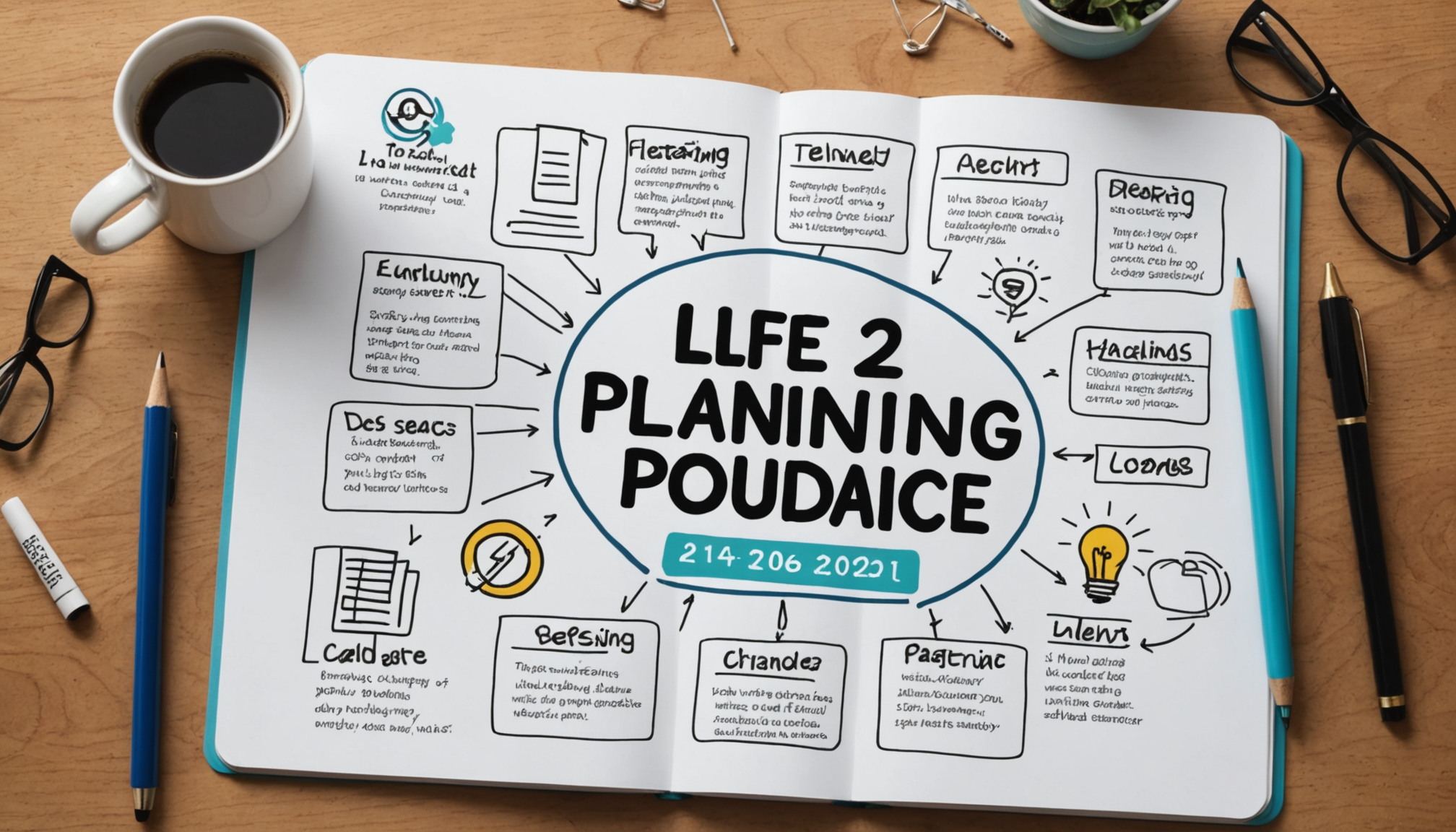
Life planning used to follow a simple script: pick a career at 18, climb for thirty years, retire at 65. In 2026, that script has been shredded. AI agents now handle entry-level knowledge work, four-day work week trials are spreading across Europe and parts of North America, careers routinely span three or four industries, and millions of people are planning for a lifespan that could stretch past 90. Planning your life today is less about predicting the future and more about building a system that adapts to it.
Why the Old Life Plan Stopped Working
Three forces have broken the linear model:
- Shorter skill half-lives. Technical skills now depreciate in roughly two to five years. A plan built on one credential is a plan built on sand.
- Longer lives. A 60-year retirement isn't financially or psychologically realistic. Longevity planning is now a core life-planning pillar, not an afterthought.
- Volatile costs. Housing, healthcare, childcare, and food have all outpaced wage growth in many markets, which means resilience matters as much as ambition.
The result: plans must be iterative. The people who thrive in 2026 aren't the ones with the most detailed 30-year forecast. They're the ones who review, adjust, and re-commit on a schedule.
The Five Pillars of a 2026-Ready Life Plan
Any life plan that ignores one of these pillars will eventually crack. Rate yourself from 1 to 10 on each, then focus your energy on the lowest score.
1. Career and Skills
Stop asking "what job do I want?" and start asking "what problems do I want to solve, and what capabilities do I need to solve them?" Build a skill stack that combines one deep specialty with AI fluency, communication, and commercial judgment. Update that stack annually.
2. Money and Resilience
Resilience first, returns second. An emergency fund covering six to nine months of essential expenses, a sinking fund for predictable large costs, and a clear-eyed view of longevity risk come before optimization. Automate contributions so willpower isn't part of the equation.
3. Health and Longevity
Health is the asset that compounds silently. Strength training, cardiovascular fitness, sleep, and preventive screenings in your 30s and 40s dramatically change your options in your 70s. The most expensive life plan is the one undone by preventable illness.
4. Relationships and Community
The Harvard Study of Adult Development and decades of follow-up research keep pointing to the same conclusion: relationship quality is the strongest predictor of late-life happiness. Schedule connection the way you schedule work.
5. Purpose and Contribution
Purpose isn't a single grand mission. It's usually a portfolio — mentoring, volunteering, creative work, faith, family, craft. The goal is having at least two sources so that losing one doesn't leave you empty.
Plan in Decades, Review in Quarters
The most practical structure for modern life planning is a two-speed system:
- The decade map (one page). Write down what you want your life to look like in 10 years across all five pillars. Keep it directional, not granular.
- The three-year themes (three to five bullets). What has to be true in three years for the decade map to stay plausible?
- The 90-day loop (weekly review). Two or three concrete projects per quarter. Review progress every Sunday, adjust every 13 weeks.
This is where a structured planning tool earns its keep. PlanScaler.com lets you map goals across life domains, break them into quarterly milestones, and see at a glance where your effort and your intentions have drifted apart. Instead of juggling five notebooks and a spreadsheet, you get one visual roadmap that updates as your life does.
Career Planning When AI Rewrites Job Descriptions
The 2026 labour market rewards people who treat their career as a product, not a position. That means:
- Portfolio income. A primary role plus one or two small income streams reduces the shock of a layoff.
- AI leverage. Learn to delegate drafting, research, analysis, and scheduling to AI tools — then spend the reclaimed hours on judgment and relationships.
- Visible proof of work. A public portfolio, writing, or open-source contributions outperform a résumé in a market where hiring managers verify before they interview.
- Re-skilling windows. Block four to six weeks each year for deliberate learning. Treat it as a business expense, not a hobby.
Money: Resilience Before Returns
With interest rates and markets swinging unpredictably, financial life planning should prioritize not being forced into bad decisions. Practical moves for 2026:
- Hold six to nine months of essential expenses in cash or near-cash.
- Separate "sinking funds" (car replacement, travel, medical) from your emergency fund.
- Model retirement at 85, 90, and 95 — not just 65.
- Review insurance once a year, especially disability and long-term care.
- Automate everything you can, then leave it alone.
Health Is the Compound Interest of Life Planning
You cannot execute a great plan from a broken body. The highest-leverage habits are unglamorous: lift weights twice a week, walk 8,000 steps a day, protect seven to eight hours of sleep, get annual bloodwork, and address mental health before it becomes a crisis. These are not wellness trends; they're infrastructure.
Your First 30 Days
- Write your one-page decade map across all five pillars.
- Score each pillar and pick your single weakest area.
- Define three 90-day projects that would move that pillar forward.
- Put a 30-minute weekly review on your calendar.
- Set up a tracking system — PlanScaler.com is built for exactly this kind of multi-domain life planning.
- Tell one person about your plan. Accountability beats motivation.
The Bottom Line
Life planning in 2026 isn't about locking in a future you can't see. It's about building a flexible architecture — clear direction, quarterly reviews, and resilience in every domain — so that when the world shifts, you shift with it instead of starting over. Write the plan. Review it often. Give yourself permission to revise it. That's how a good life gets designed, one decade at a time.