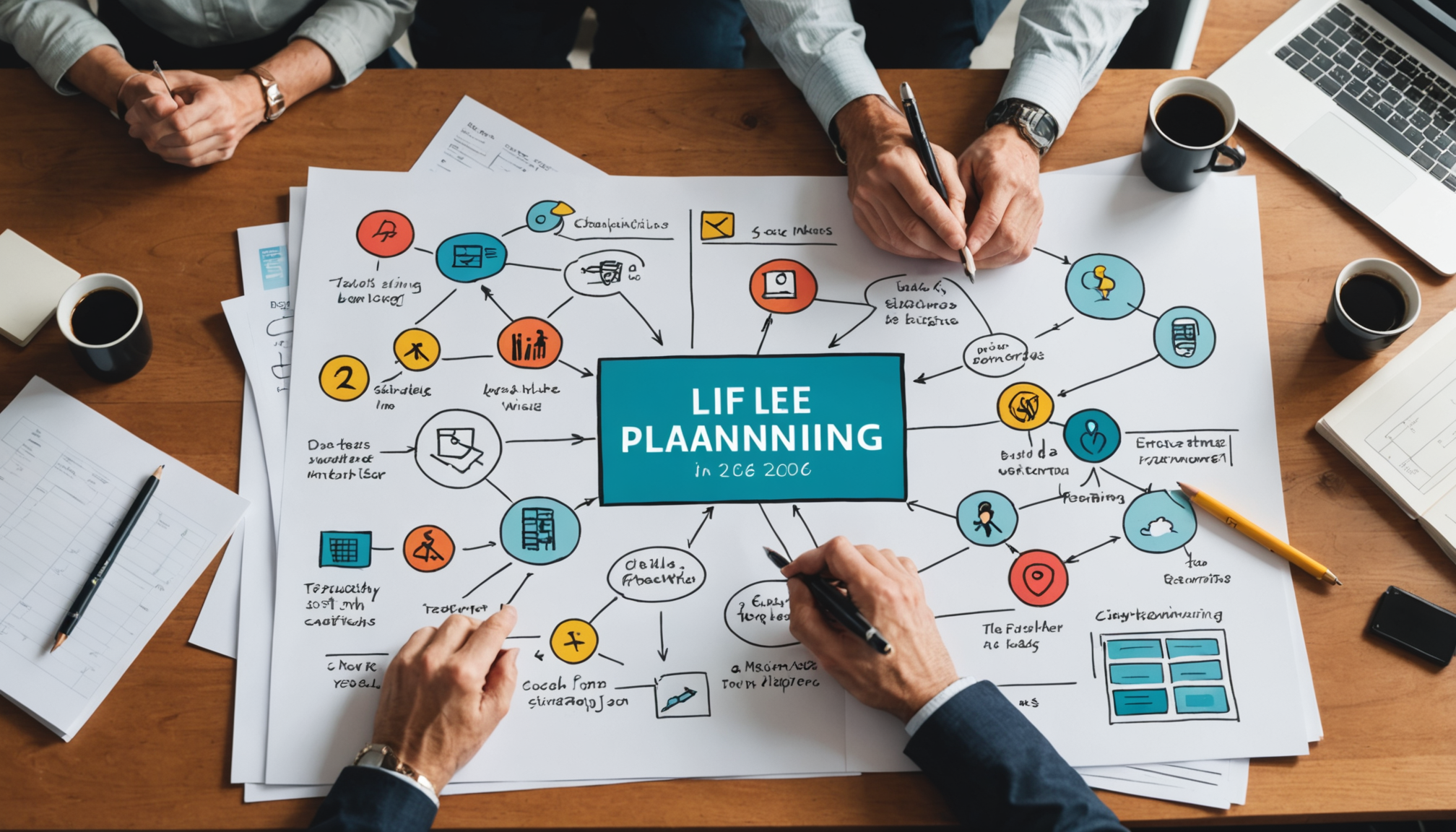
A decade ago, “life planning” meant picking a career at 22, buying a house at 30, and retiring at 65. In 2026, that script is gone. AI agents handle entry-level knowledge work, people are living and working longer, remote contracts span continents, and a single employer rarely lasts a decade. Planning for a linear life in a non-linear world is the fastest way to end up somewhere you never chose.
The good news: life planning still works — it just looks different. Here is a practical framework you can use this year, plus the tools that make it stick.
Why Traditional Life Planning Breaks Down in 2026
Three shifts have rewritten the rules:
- Career volatility. Roles that existed in 2020 are being automated or restructured, and skills now have a half-life measured in months rather than decades.
- Longer, less predictable lives. With 60-year careers becoming realistic, a “one career, one pension” plan simply cannot cover the distance.
- Unbundled milestones. Marriage, home ownership, children, and retirement no longer arrive in a fixed order — or on a fixed timeline.
Planning has shifted from prediction to navigation. You are no longer drawing one straight line; you are building a system that adapts when the terrain changes.
The 2026 Life Planning Framework
1. Start with outcomes, not job titles
“Become a senior manager” is a job title. “Have work that lets me live near my family and travel three months a year” is an outcome. Outcomes survive industry changes; titles do not. Write down three to five outcomes for the next three years across work, money, health, and relationships.
2. Plan in 90-day sprints
Ten-year plans gather dust. Quarterly cycles keep you honest. Each quarter, pick one priority per life area, define a measurable result, and review at the end. Four small corrections a year beat one failed five-year plan every time.
3. Build financial resilience, not just a nest egg
In an era of volatile interest rates and unpredictable income, resilience beats optimization. That means an emergency fund covering six months, diversified income streams, and high-interest debt cleared before speculative bets. Ask not “what is my target number?” but “how many months could I survive a shock?”
4. Invest in skills that compound
AI literacy, communication, sales, and systems thinking transfer across roles and industries. Set aside a fixed weekly block — even three hours — for deliberate learning. Over five years that is roughly 750 hours of compounding advantage no layoff can erase.
5. Protect health and relationships
These are the multipliers on everything else. A plan that ignores sleep, movement, and the people you love will collapse the moment stress rises. Schedule them like meetings, because they are the infrastructure every other goal depends on.
Current Trends Reshaping Life Plans
Several 2026 headlines matter directly to how you plan:
- AI agents at work. As automation spreads through white-collar tasks, “what can only I do?” becomes the core career question.
- Longevity science. Healthspan research is pushing people to plan 90-year lives instead of 70-year ones.
- Flexible work and four-day week pilots. Time is becoming the currency people optimize for, not just salary.
- Portfolio careers. A job plus a side venture plus investments is the new normal, not the exception.
- Digital nomad and remote-work policies. Location is now a planning variable, not a fixed assumption.
How to Actually Track All of It
Most good life plans die from fragmentation. Goals live in one app, finances in another, your calendar in a third, and nothing connects. That is the exact problem PlanScaler.com was built to solve: one place to map your life goals, break them into quarterly milestones, and see how work, money, health, and relationships move together instead of competing for the same hours.
When your plan lives in a single visual system, review becomes a twenty-minute habit rather than an annual guilt trip. You spot drift early — the promotion that quietly eroded your health, the side project eating your weekends — and adjust before it costs you a year.
Five Mistakes to Avoid
- Planning for certainty. Build scenarios, not single-point forecasts.
- Optimizing one area. A brilliant career with broken health is not a plan.
- Chasing outcomes you cannot control. Track inputs and habits; results follow.
- Never reviewing. An unexamined plan is just a wish list.
- Going it alone. Accountability partners and the right tools keep momentum alive.
Your Next 30 Days
Do not try to rebuild your entire life this week. Do this instead:
- Write your three to five outcomes for the next three years.
- Choose one goal per life area for this quarter.
- Block weekly time for health, learning, and relationships.
- Set a recurring 15-minute Friday review.
- Put everything into one system — PlanScaler.com makes that final step painless.
Life planning in 2026 is not about predicting the future. It is about building a flexible, visible map you can update as the world shifts — and then actually following it. Start with one outcome, one quarter, one review, and let the compounding do the rest.