Why Daily Task Organisation Matters More Than Ever in 2026
If your to-do list feels like it's growing faster than you can check things off, you're not alone. In 2026, the average knowledge worker juggles more apps, notifications, and responsibilities than at any point in history. Between hybrid work schedules, AI-assisted workflows, and always-on communication, the line between "busy" and "productive" has never been blurrier.
That's exactly why daily task organisation has shifted from a nice-to-have skill into a survival strategy. The professionals thriving right now aren't working more hours — they're organising their days with intention. This guide breaks down the systems, tools, and habits that actually work in 2026, so you can take control of your day instead of letting it control you.
The Real Cost of Poor Daily Planning
Recent workplace research continues to show that the average employee loses significant time each week to task-switching and context switching. Every time you bounce between an email, a Slack message, and that report you were supposed to finish, your brain pays a "switch tax" that can eat up to 40% of your productive capacity.
The fix isn't working harder. It's structuring your day so your brain doesn't have to constantly decide what's next. When your tasks are organised in advance, decision fatigue drops, focus rises, and you finish the day with actual accomplishments instead of a vague sense of having been busy.
5 Proven Methods for Organising Daily Tasks
1. Time Blocking (Still the Gold Standard)
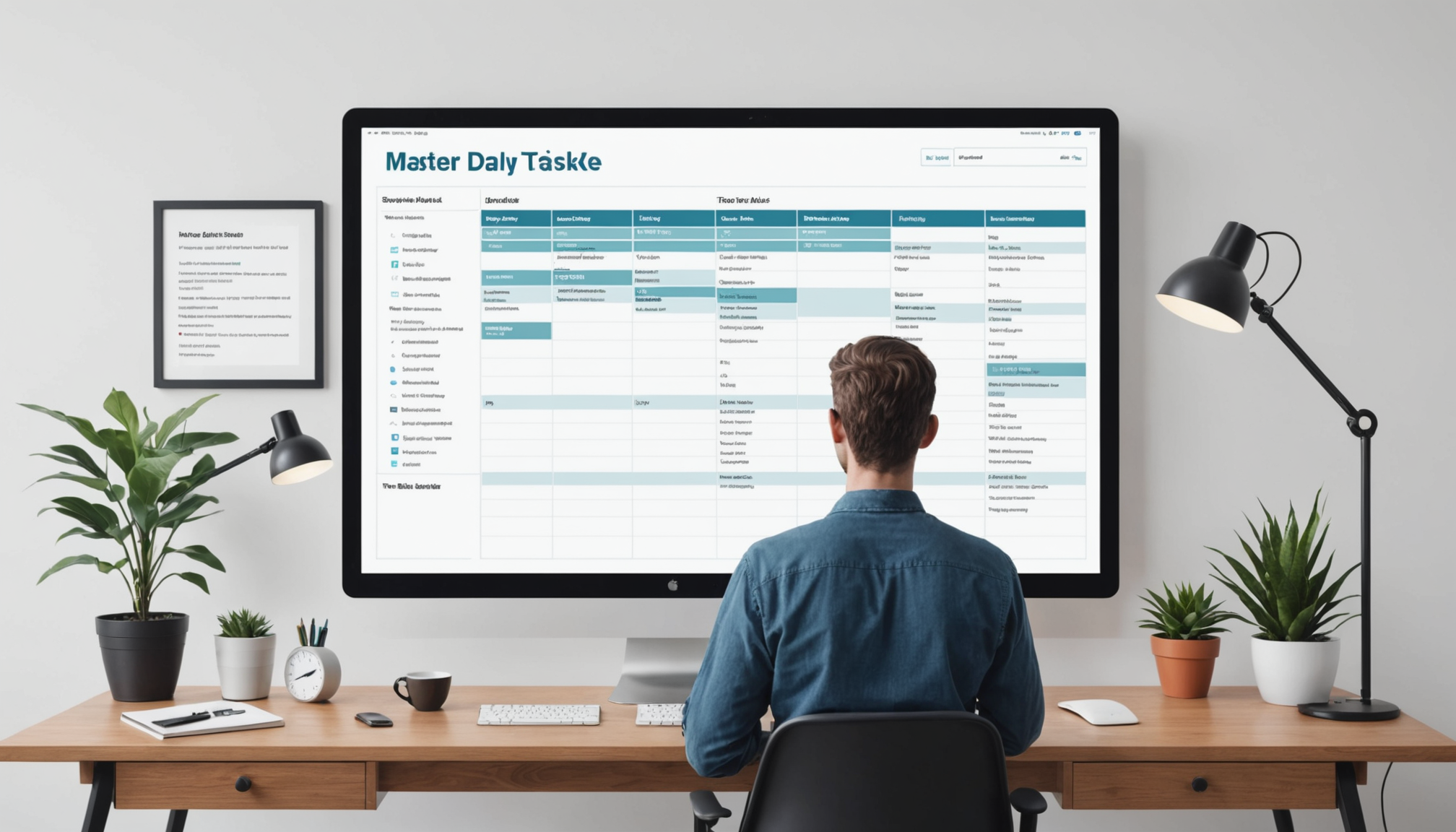
Time blocking — assigning every task a specific slot on your calendar — remains the most effective daily organisation method in 2026. Instead of a floating to-do list, your day becomes a map. Deep work gets the morning. Meetings get the afternoon. Admin gets a 30-minute window. When something doesn't fit, you immediately know it needs to move to another day rather than quietly piling up.
2. The 1-3-5 Rule
Each day, commit to one big task, three medium tasks, and five small ones. That's it. This simple constraint forces you to prioritise ruthlessly and prevents the classic mistake of writing a 20-item list that guarantees failure by 10 a.m.
3. Eat the Frog — But Schedule It
Do your hardest, most important task first. But in 2026, we add one refinement: schedule your frog and protect it. Block 90 minutes, silence notifications, and treat it like a meeting with your most important client — because it is.
4. The Two-Minute Rule
If a task takes less than two minutes, do it immediately instead of adding it to a list. This small habit prevents dozens of micro-tasks from accumulating into an overwhelming backlog by Friday.
5. AI-Assisted Task Organisation
One of the biggest shifts in 2026 is AI-powered task management. Modern tools can now automatically prioritise your to-do list, suggest realistic time estimates, and reschedule tasks when your day goes sideways. The key is using AI as an organiser, not a decision-maker — you still set the priorities; the tool handles the logistics.
Building a Daily Organisation Routine That Sticks
Great organisation isn't about finding the perfect app — it's about building a repeatable routine. Here's a simple daily framework:
- Morning (5 minutes): Review your top three priorities and confirm your time blocks.
- Midday (3 minutes): Check progress, move unfinished tasks, and reprioritise if needed.
- Evening (10 minutes): Brain-dump tomorrow's tasks, review what got done, and close open loops so your brain can actually rest.
That evening review is the secret weapon most people skip. It takes ten minutes, but it means you start tomorrow with a plan instead of a scramble — and it dramatically improves sleep quality because your mind isn't desperately trying to remember everything overnight.
Why Tools Alone Won't Save You
The productivity app market is booming, yet burnout rates remain stubbornly high. The reason is simple: tools store tasks, but they don't organise your day. You can have the prettiest to-do list in the world and still end every day wondering where the hours went.
This is where a purpose-built planning platform makes a real difference. PlanScaler.com is designed specifically around daily task organisation — helping you turn scattered to-dos into a structured, realistic daily plan. Instead of juggling five different apps, you get one place to prioritise, schedule, and track your tasks against actual available time.
The 2026 Trend: Intentional Simplicity
Across the productivity world in 2026, one theme keeps emerging: less is more. The most effective professionals are consolidating their tools, reducing their task lists, and protecting their focus like never before. They've realised that a cluttered system creates a cluttered mind.
Whether you're a freelancer managing multiple clients, a manager coordinating a hybrid team, or a student balancing coursework and side projects, the principles remain the same: capture everything, prioritise honestly, schedule realistically, and review daily. If you want a head start, PlanScaler.com offers a streamlined way to organise your daily tasks in one clear view — so you spend less time planning your work and more time doing it.
Start Tomorrow, Not Someday
Daily task organisation isn't about becoming a productivity robot. It's about creating enough structure that your energy goes into meaningful work instead of mental overhead. Pick one method from this guide, commit to it for two weeks, and refine from there.
Your to-do list will always exist. The question is whether it runs your day — or you do. In 2026, the people who win are the ones who plan deliberately. Start with one simple routine, use the right tools like PlanScaler.com to support it, and watch how much lighter your week feels.