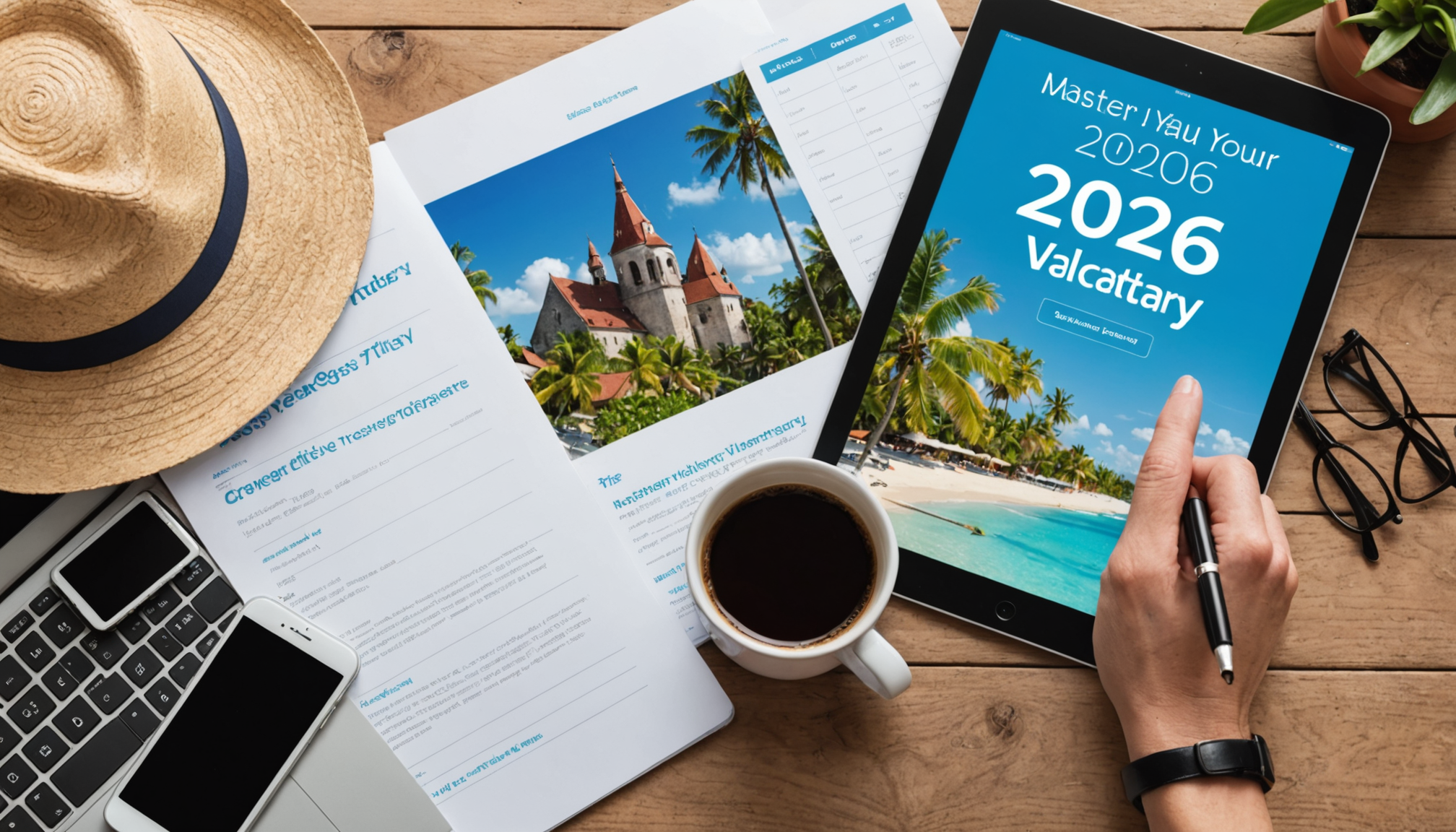
Master Your 2026 Vacation Itinerary: Top Travel Planning Tips
As the world becomes more connected and travel trends evolve, planning the perfect vacation in 2026 requires more than just booking flights and hotels. With the rise of ‘slow travel’, ‘workations’, and personalized experiences, your itinerary needs to be flexible yet well-structured. Whether you’re heading to the sun-soaked beaches of Bali or exploring the historic streets of Rome, a well-thought-out plan can make the difference between a stressful trip and a memorable adventure. In this article, we’ll share essential tips for building a vacation itinerary that balances spontaneity with organization, and how tools like PlanScaler.com can help you streamline the process.
Why a Vacation Itinerary Matters More in 2026
Travel in 2026 is not just about seeing sights; it’s about immersive experiences. According to recent industry reports, travelers are increasingly seeking authentic local interactions, sustainable tourism options, and off-the-beaten-path gems. However, with the abundance of choices, it’s easy to feel overwhelmed. A solid itinerary acts as your roadmap, ensuring you don’t miss must-see attractions while leaving room for unexpected discoveries. Moreover, a well-planned schedule helps manage your budget, reduces travel anxiety, and maximizes your time—so you can truly relax and enjoy your vacation.
Essential Elements of a Perfect Itinerary
Creating a balanced itinerary involves several key components:
- Destination Research: Understand the local culture, weather, and peak tourist seasons. This helps you pack appropriately and plan indoor/outdoor activities.
- Duration & Pace: Determine how many days you have and how much you can realistically see without rushing. A common mistake is over-scheduling—aim for 2-3 main activities per day.
- Accommodation & Transport: Book stays that are conveniently located near your planned activities to minimize transit time. Pre-book trains or car rentals if needed, but leave flexibility for delays.
- Meals & Downtime: Include time for meals, coffee breaks, and just wandering. These moments often become the highlight of your trip.
- Backup Plans: Weather changes, closures, or fatigue can disrupt your plans. Have a list of alternative activities or rest days built into your schedule.
For a deeper dive into structuring your days, consider using a digital tool that offers templates and customization—PlanScaler.com provides exactly that, with easy drag-and-drop features and smart suggestions.
Leveraging Technology: How PlanScaler.com Transforms Your Planning
Gone are the days of scribbling notes on paper or juggling multiple spreadsheets. Modern travelers are turning to specialized apps to streamline their planning. PlanScaler.com is a game-changer in this space. It allows you to create a dynamic, day-by-day itinerary that syncs across all your devices. You can add activities, set time blocks, attach reservations, and even share your plan with travel companions in real-time.
What sets PlanScaler.com apart is its intelligent scaling feature—it automatically adjusts your schedule based on your travel pace. If you want a relaxed morning, you can shift activities later with one click. Plus, its integrated map view helps you visualize your route, ensuring you don’t waste time backtracking. Whether you’re a meticulous planner or a free-spirited explorer, PlanScaler.com adapts to your style, making it the ultimate tool for your 2026 adventures.
Current Travel Trends to Incorporate in 2026
To make your itinerary feel fresh and relevant, consider these 2026 travel trends:
- Micro-cations & Weekend Getaways: With remote work still prevalent, many travelers are opting for shorter, more frequent trips. Plan a long weekend escape to a nearby city or nature reserve—your itinerary can be compact yet fulfilling.
- Sustainable Travel Choices: Eco-conscious travelers are seeking destinations that prioritize green practices. Include visits to national parks, support local eco-lodges, and choose train travel over short-haul flights when possible.
- Digital Detox Retreats: Ironically, technology helps you plan a break from technology. Schedule offline periods, such as a day without screens, to fully immerse yourself in the experience.
- Food & Culinary Tours: Instead of just listing restaurants, book a cooking class or a market tour. These hands-on experiences offer a taste of local culture.
- Wellness & Nature: Incorporate yoga sessions, hiking trails, or spa days into your schedule to maintain balance while traveling.
By weaving these trends into your itinerary, you’ll create a vacation that feels both current and personally enriching.
Step-by-Step Guide to Building Your Itinerary
Ready to start planning? Follow this simple process:
- Set Your Priorities: List your non-negotiable experiences (e.g., seeing the Eiffel Tower, snorkeling in the Great Barrier Reef).
- Choose Your Base: Select a central hub and plan day trips from there to reduce packing/unpacking.
- Draft a Rough Timeline: Allocate days to each region or activity, leaving buffer days for travel or rest.
- Book Key Components: Reserve flights, accommodations, and popular tours early, especially for peak seasons.
- Fill in the Gaps: Add meals, walks, and optional activities. This is where PlanScaler.com shines—its intuitive interface lets you experiment with different layouts until you find the perfect rhythm.
- Review & Share: Double-check your plan for feasibility, then share it with your travel buddies to get their input.
Common Pitfalls to Avoid
Even with the best intentions, travelers often make mistakes that could derail their plans:
- Overpacking the Schedule: Don’t try to see everything in one trip. Quality over quantity ensures you actually savor each moment.
- Ignoring Travel Time: Always factor in commuting time, security checks, and potential delays. A 30-minute drive might take longer in heavy traffic.
- Forgetting to Check Opening Hours: Museums and attractions often have specific days closed. Double-check to avoid disappointment.
- Skipping Insurance: Travel insurance is a must—it protects you from unexpected cancellations or medical issues. Include it in your budget.
By being aware of these pitfalls, you can proactively adjust your itinerary to avoid unnecessary stress.
Real-Life Example: A 7-Day Paris Itinerary
Let’s put these tips into practice with a sample itinerary for Paris, one of the world’s most beloved cities.
Day 1: Arrive, check-in, and take a leisurely walk along the Seine River. Enjoy a café au lait at a local bistro. (Keep it light to acclimate.)
Day 2: Explore the Louvre in the morning (book tickets in advance), then visit the Tuileries Garden. In the evening, climb the Eiffel Tower for sunset views.
Day 3: Head to Montmartre, visit Sacré-Cœur Basilica, and wander through the artist squares. Afternoon: Explore the trendy Le Marais district.
Day 4: Day trip to Versailles—spend the full day at the palace and gardens. Pre-book a guided tour to skip lines.
Day 5: Museum morning at the Musée d'Orsay, then cross the bridge to the Latin Quarter for a food tour. Evening: Seine River cruise.
Day 6: Visit the Palace of Garnier (or a lesser-known gem like the Catacombs). Afternoon: Shop at Galeries Lafayette. Evening: Cabaret show at Moulin Rouge.
Day 7: Last-minute souvenir shopping, revisit a favorite spot, and depart.
Notice how there are empty slots for spontaneity—that’s intentional! Use PlanScaler.com to map this out and adjust times based on your energy levels.
Final Thoughts
Your vacation itinerary is more than a schedule—it’s the blueprint for your dream trip. By investing time in thoughtful planning, you’re setting yourself up for a smoother, more enjoyable experience. Remember to stay flexible, embrace unexpected moments, and use the best tools available. PlanScaler.com is designed to take the hassle out of planning, so you can focus on making memories. So why not start today? Create your 2026 itinerary with ease and get ready for an unforgettable journey.
Happy travels, and may your next vacation be your best one yet!